BC Rent Increase Limit 2026: Rules for BC Tenants
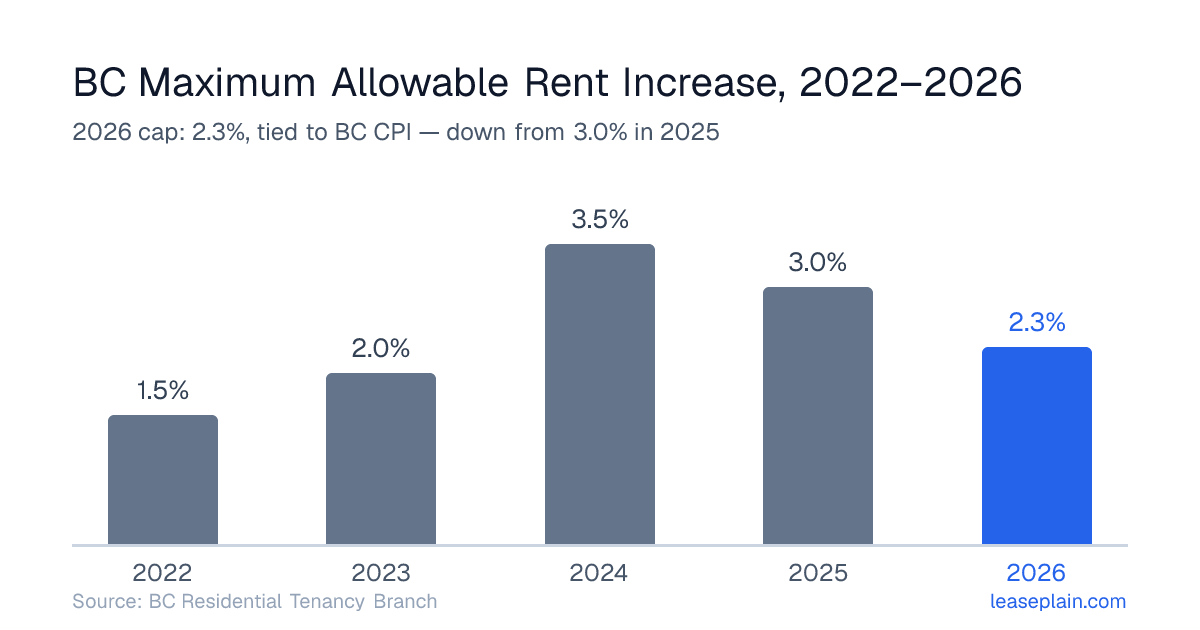
British Columbia caps rent increases at BC CPI each year — no additional buffer. The 2026 allowable increase is 2.3%. Here is what that means, what notice your landlord must give, and what to do if the increase exceeds the allowed amount.
How BC Calculates the Rent Increase Cap
Unlike Ontario's fixed guideline, British Columbia ties its annual rent increase limit directly to the BC Consumer Price Index (CPI). Since 2019, the allowable increase equals BC CPI only— a "CPI + 2%" buffer formula was abolished in 2018 and no longer applies. The provincial government announces the exact figure each year, typically in the fall for increases taking effect the following year. For 2026, the cap is 2.3%.
The BC CPI-only formula ensures rents rise strictly in line with inflation, without any additional buffer for landlords. All residential tenancies covered by the Residential Tenancy Act (RTA) are subject to this cap — unlike Ontario, there is no post-2018 exemption for newer buildings.
The 3-Month Notice Requirement
In BC, a landlord must give tenants a minimum of three full months written notice before a rent increase takes effect. This notice must be provided using the approved RTB-7 form (Notice of Rent Increase). A general letter or verbal notice is not sufficient.
The notice period starts from the date the tenant receives the written notice. If your rent is due on the first of the month and you receive a notice on February 28, the earliest the increase can take effect is June 1 — because March, April, and May are the three full months of notice.
A rent increase can only happen once every 12 months. If your landlord has already raised rent within the past year, they cannot give you another increase notice until a full year has passed since the last increase.
How the RTB Enforces Rent Limits
The Residential Tenancy Branch (RTB) is BC's rental housing tribunal. It does not proactively audit every rent increase — enforcement is complaint-driven. If a tenant believes their landlord has charged above the allowable limit, they can file a dispute resolution application with the RTB.
The RTB will schedule an arbitration hearing where both parties can present their case. If the arbitrator finds the increase was above the cap, they can order the landlord to refund the overpaid amount and reduce rent to the lawful level.
Landlords who want to increase rent beyond the annual limit — due to significant capital expenditures or extraordinary operating cost increases — must apply to the RTB for permission. This is an additional rent increase (ARI) application, and it is not automatically granted.
What to Do if Your Increase Is Over the Limit
If you receive a rent increase notice that appears to exceed the allowable percentage, take these steps:
- Calculate the allowed amount. Use the Rent Increase Calculator to confirm whether the proposed increase exceeds the limit for your current rent.
- Write to your landlord. Send a dated letter or email stating that the increase exceeds the allowable limit and that you will pay only the lawful amount.
- File with the RTB. If the landlord insists on the higher amount, file a dispute resolution application. The RTB can be reached at 1-800-665-8779 or through their online portal.
- Keep paying your current rent while the dispute is ongoing — withholding rent entirely can create additional legal problems.
For more on your rights as a BC renter, see our full guide on renting in British Columbia.